Your MFA Worked. You Got Hacked Anyway.
You did everything right. Strong password, authenticator app, that little green checkmark on your push notification. You logged in like a responsible adult. And somewhere, an attacker is now sitting inside your account, reading your emails, approving wire transfers, and never once had to touch your MFA.
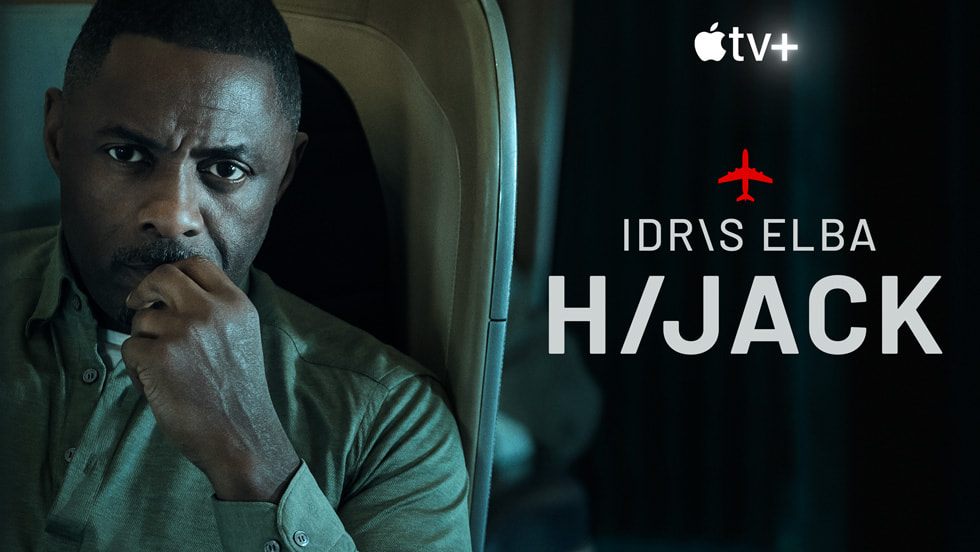
Welcome to session hijacking — the attack that doesn't bother breaking down your front door because it just climbs through the window you left open after you walked through it. And you probably don't have Idris Elba to save the day.
The login isn't the vulnerable part anymore
Here's the uncomfortable truth: MFA protects one moment. The moment you authenticate. After that, your browser holds onto a session token — a little cookie that says "this person already proved who they are, let them keep working" — and that token is trusted for hours, sometimes days, without asking you to prove anything again.
Attackers figured this out a while ago. Why fight a password, a push notification, and a hardware key when you can just steal the cookie that all three of those things produced? Infostealer malware (Lumma, RedLine, Vidar — pick your poison) is now sold on criminal forums specifically to harvest session tokens straight out of browsers. Malicious browser extensions do the same thing, quietly, in the background, while you write your Tuesday emails. Adversary-in-the-middle phishing kits proxy your entire login flow, MFA and all, and hand the attacker your live session the second you finish typing your code.
None of these techniques ask you to hand over a password. None of them trip an MFA prompt. They just wait for you to do the hard work of authenticating, then take the receipt.
This isn't hypothetical
Some of the largest breaches of the last few years followed exactly this playbook. Attackers didn't need to guess passwords or brute-force one-time codes — they bought or stole valid session tokens and walked in the front door wearing someone else's badge. Security teams have watched fully MFA-protected accounts get compromised in minutes because the token, not the credential, was the actual target.
It's a genuinely inconvenient realization: the industry spent a decade telling everyone that MFA solves the login problem. It does — for the login. It was never designed to protect the six, eight, or twelve hours after the login, and attackers have quietly built an entire economy around that gap.
The fix isn't "more MFA"
The instinct is to bolt on more friction — shorter token lifetimes, more re-authentication prompts, more push notifications. But we've already written about why that road leads to MFA fatigue and prompt-bombing, and piling more prompts onto users just trains them to tap "Approve" faster, not think harder.
The real fix is to stop treating authentication as a single event and start treating it as an ongoing state. If your system can continuously confirm that the physical person who logged in is still the one sitting at the keyboard — via proximity, device signals, and behavioral context, rather than a static token that any piece of malware can copy and paste — a stolen cookie stops being useful. An attacker on the other side of the world can have your session token memorized word for word; it still won't put them within Bluetooth range of your actual device.
That's the gap NearAuth.ai is built to close. Not a better login. A login that never really ends — and never really gets left behind for someone else to find.
chris@nearauth.ai