AI Can't Be Held Accountable, but People Still Can, Right?
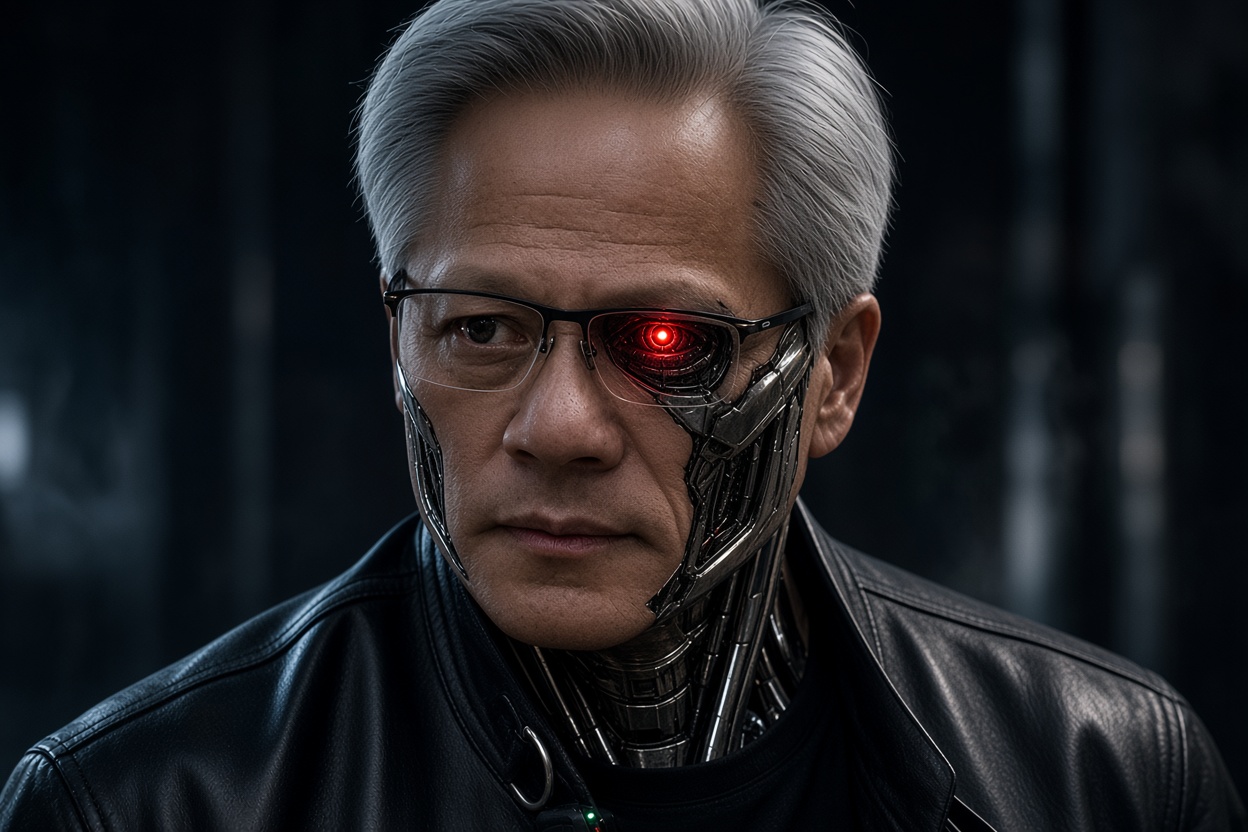
I've spent a lot of the last year hearing that AI can't be trusted to run things because it can't be held accountable. You can't fire a model. You can't make it testify. It doesn't feel shame.
Fair enough. But after this week, I'm not sure that's the argument it used to be. Nvidia's board reinstated Jensen Huang as CEO less than two weeks after he resigned. If accountability for humans doesn't even last a fortnight, I'm not sure what the machines are missing.
What happened
Earlier this month, Huang resigned after reports that he'd had an affair with a woman suspected of being a Chinese intelligence asset. He told staff he had been unfaithful to his wife — with two women, although there may be more. Nvidia opened an investigation into whether he was the target of a foreign intelligence effort.
On its earnings call last Tuesday, the board said it did not intend to bring him back. And I believed them. I still believe that most people have integrity, including people on boards. Yet five days later, the board voted unanimously to reinstate him as president, CEO and director. It said it was satisfied with his candor, and that senior U.S. government officials had told it his return posed no national security risk. The stock closed up more than 31%.
Here's the part worth reading twice: the investigation into whether he was compromised is still open. Huang is scheduled to sit for closed-door interviews with three House committees on December 1. He'll do it as CEO. (But at least his board thinks he showed candor. Plus they brought up that Arnold was a good guy in Terminator 2.)
Accountability now has a price tag
I'm not here to judge anyone's marriage. That's between him and his family. And Huang may well be cleared (of colluding with a spy — he's definitely guilty of poor morals). He's helped to build one of the most important companies in the world, and nobody disputes that.
But the board told us a week ago that it wouldn't reinstate him. Then the investigation didn't finish, the facts didn't change, and the answer did. What changed was the pressure, and a stock price that jumped 31% the moment he came back.
That's the lesson everyone else is going to take from this. The rules apply until you're valuable enough. Then they're a negotiation.
So when people tell me we can't hand decisions to AI because AI can't be held accountable, I want to ask: compared to what? A system that answers to a market cap and a phone call from the White House isn't accountability. It's just a slower model with better PR.
In security, we'd never do this
I build authentication for a living, so I can't help seeing this as an identity problem.
When we suspect a credential is compromised, we don't ask how useful it's been. We revoke it. We investigate. We restore access when the investigation is done, not when someone important vouches for it. Nobody keeps the admin account live because it's the admin account. You lock it down first.
We hold a login prompt to a higher standard than we just held the CEO of one of the most valuable companies on earth.
So, should the AI take over?
Well, accountability for people isn't really dead. It just seems optional now for the people at the very top, and that's a choice, not a law of nature. The rest of us can still make a different one: in our companies, on our boards, and in the systems we build.
That means rules that don't bend based on who's on the other end. Access that's earned back through evidence, not influence. And standards need to be upheld, not just laid out.
If we can build that into software, we can expect it from people too.
chris@nearauth.ai